LIFE INSURANCE

Disability, Accident, Sickness & Hospitalization Insurance

Want to get a quote for your life insurance?

WHY DO YOU NEED
LIFE INSURANCE?

Life insurance offers financial safety for your loved ones in case of an unexpected death. These benefits can help meet all the needs of your family, including:

  • Mortgages, credit card debt, unpaid bills
  • Child care expenses
  • Education for your children
  • Living expenses for your family
  • Large tax liabilities
  • Legacy fund for your children
  • And much more

Keep providing for your family, even when you are no longer there for them.There are two types of Life Insurance: Temporary and Permanent Insurance.
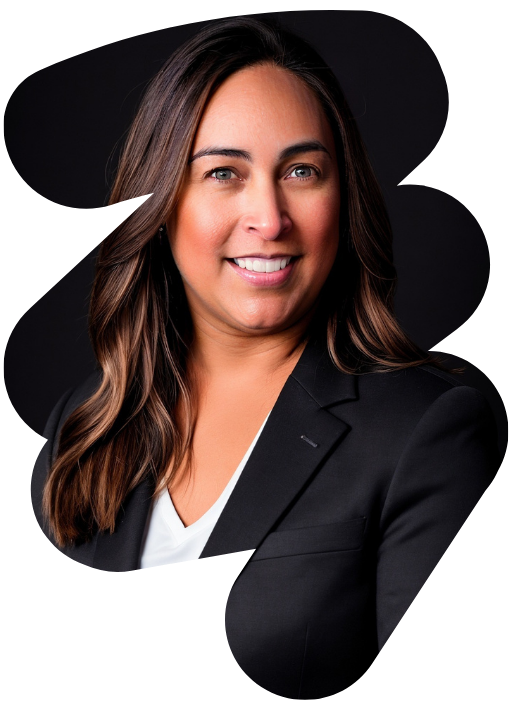
Alika Martin

WHY DO YOU NEED
HEALTH INSURANCE?

Health insurance helps cover the high costs of medical care, protecting you from financial hardship due to unexpected medical bills.

Alika Martin

WHY DO YOU NEED
TRAVEL INSURANCE?

Travel insurance provides peace of mind, knowing you're safeguarded against unforeseen events and emergencies during your travels.

Alika Martin

WHY DO YOU NEED
INVESTMENT & SAVINGS?

Investment and savings insurance safeguards your financial future from market volatility and unforeseen events, ensuring your financial goals stay on track. It provides peace of mind by securing your investments and savings, protecting your financial stability.

Alika Martin

WHY DO YOU NEED
TERM LIFE INSURANCE?

WHY CONSIDERING TERM LIFE INSURANCE?

As an independent insurance broker, we work with different insurance companies to find the best product for you.


  • Term insurance may be an option when you want protection for a specific period and have a limited budget.
  • Term Insurance has an expiration date.
  • Term insurance could be purchased to provide coverage for 10-15-20 years, for example, until you’ve paid off your mortgage or/and your children become independent

WHAT ARE THE PROS AND CONS OF TERM INSURANCE?

  • In the early years, the Term Insurance price will be much lower than the price of Permanent Insurance.
  • Each term you renew the insurance, the amount will increase (every 10 or 20 years).
  • One of the policy options is to convert Term Insurance to Permanent Insurance without any medical evidence.
  • The premium for Term Insurance increases with age and can be very expensive after the age of 60-65.

KEY BENEFITS OF TERM LIFE INSURANCE

  • Budget friendly for short term needs
  • Death benefit guaranteed for your term (if you keep paying your premium for your term)
  • Protection for certain period of time

PERMANENT INSURANCE
WHOLE LIFE INSURANCE

AN INSURANCE TYPE WITH CASH VALUE THAT OFFERS LIFETIME COVERAGE

As an independent insurance broker, we work with different insurance companies to find the best product for you.


  • Regardless of when death happens, the beneficiary(ies) will receive the guaranteed death benefit.
  • Compared to Term Insurance which provides coverage for a certain period, Whole Life Insurance coverage has no end date.
  • The payments of LEVEL premium will not change with time.
  • The primary future element of this policy is the savings component, which can be invested for tax-free growth and used for different needs.
  • There are two types of Whole Life Insurance: Participating Whole Life Insurance and Non-Participating Whole Life Insurance.
  • The insured can receive dividends for participating in a Whole Life Insurance policy.
  • There are many different ways to use these dividends as well.

HOW CAN YOU USE THE SAVINGS COMPONENT – CASH SURRENDER VALUE?

  • Partially withdraw Cash from Cash Surrender Value
  • Borrow against Cash Surrender Value from the insurance company
  • Borrow against Cash Surrender Value from the insurance company
  • Use Cash Surrender Value as a collateral for leveraging money from a financial institution - this strategy can be used as an additional source of retirement income, which is non-taxable
  • Keep building Cash Surrender Value, as some policies allow you to make additional premium payments

SPEED UP YOUR PAYMENT

  • Another option Whole Life has for premiums: pay for life, Pay 10, Pay 20 (the period can be different depending on your insurance provider) or pay until a certain age.
  • For example, if you want to have coverage for life but do not want to pay after 65, you can choose to pay off premiums early.
  • Whole Life has insurance Cash Surrender Value, and you can choose a premium offset option where you can stop paying out-of-pocket, and your dividends will cover the rest of your ongoing premiums.

KEY BENEFITS OF WHOLE LIFE INSURANCE

  • Protection, saving and investment in the same product
  • Cash Surrender Value can be used for different needs
  • Receive the dividends (they are never guaranteed but most of the insurance companies are well manage investment and often pay dividends)
  • Tax deferral on your investment (if you keep your dividends inside the policy)
  • Death benefits are guaranteed for life (if you keep paying your premium)

PERMANENT INSURANCE
UNIVERSAL LIFE INSURANCE

The most flexible type of Permanent Life Insurance with investment and savings components

  • The policy holder has to keep a minimum payment of premiums to hold the coverage.
  • This type of insurance uses a higher risk of investment than Whole Life Insurance.
  • For an investment return, premiums need to be higher than the minimum.
    Similar to Whole Life, Universal Life has cash value, which can also be used for different purposes.

  • For example, you can take a vacation from paying the premium and use the cash value to cover that. In this case, if you did not pay your premium for several months and have enough cash value, your policy will still be in force.
  • Additionally, one of the advantages of this type of insurance is that you can use the Universal Life policy to shelter investment income if you reach your maximum RRSP contributions.

Key benefits of Whole Life Insurance

  • Flexibility, complex insurance needs, premium flexibility, mortality costing option
  • Tax deferral for investment income
  • Protection and investment in the same product
  • Cash Value
  • Can increase/decrease the death benefit or/and add investment, or add cumulative premium or index to inflation
  • Can add more people to the policy or change lives insured by the policy (to add a person to the policy, they need to qualify, it may impact the insurance cost)

PERMANENT INSURANCE
TERM 100

The most flexible type of Permanent Life Insurance with investment and savings components

  • This type of insurance is easy to understand and requires no investments. The insurance offers no cash value, but is guaranteed to pay out death benefits if the life insurance owner passes away.
  • Term 100 is a life insurance policy that offers coverage for life and the premium will not change during the time. Term 10 only provides coverage for 10 years and the premium will increase as you age.
  • Term 100 has two options for premium is the same as Whole Life: pay for life or speed up your payment – Pay 20 (or Pay 10, the period can be different depending on your insurance provider) or pay until a certain age.
  • For example, if you want to have coverage for life but you do not want to pay after age 65, you can choose to pay all premiums early.

Key Benefits of Term 100 Insurance

  • Guaranteed death benefits (if you keep paying your premium)
  • Easy to understand, your coverage will be in place until the moment you stop paying for the policy

CRITICAL ILLNESS INSURANCE

Critical illness insurance supports financially if you become sick

You will receive a lump sum payment to spend on any needs if you are diagnosed with one of the conditions covered in the policy. For example:

  • If you need surgery or other procedures done in another country, that will help you cover the cost
  • If you’re feeling unwell, you will be able to take time off from work to get better
  • You will be able to cover the medical expenses which are not covered by Alberta Health (or another province or territory, depending on where you live)
  • You will be able to take vacation, etc.

Each policy can be different, depending on what you choose and what kind of company you are dealing with.You are eligible to apply for Critical Illness Insurance before you turn 65 years old.You can choose the duration of coverage: 10 years, 20 years, until 65, 75, 100 years old.All these factors as well as the medical history of the person applying for coverage and their family (parents and siblings) will affect the insurance cost.

Critical Illness Insurance for your child

Parents can also buy Critical Illness Unsurance for their children who are 30-days+ old, and coverage can be in place until the age of 25. Most insurance companies include extra 4-5 conditions for children such as:

  • Cerebral palsy
  • Congenital heart disease
  • Cystic fibrosis
  • Cystic Muscular dystrophy fibrosis
  • Type 1 Diabetes Mellitus

Please contact us to find out more about Critical Illness insurance, get a quote, and what condition can be covered. You will receive a free estimation.

What is the most important feature of Critical Illness Insurance?

Parents can also buy Critical Illness Unsurance for their children who are 30-days+ old, and coverage can be in place until the age of 25. Most insurance companies include extra 4-5 conditions for children such as:

  • Pay for surgery or other procedures in another country
  • Take time off from work to get better
  • Protection for certain period of time

Please contact us to find out more about Critical Illness insurance, get a quote, and what condition can be covered. You will receive a free estimation.

VISITORS TRAVELLING TO CANADA

Are you planning a trip to Canada? Maybe someone special is coming to Canada for a visit or you’re looking for a Super Visa insurance?

Either way, it should be a safe and enjoyable visit. Unexpected illnesses or injuries can happen when you least anticipate them, so make sure you’ve got travel medical insurance.

WHAT CAN BE COVERED:

  • Emergency medical expenses
  • Trip cancellation
  • Cost for lost or damaged luggage
  • Return of an ill or injured traveller to their home

TRAVEL INSURANCE IS IDEAL FOR:

  • Visitors to Canada
  • Landed immigrants and returning Canadians waiting for Government Health Insurance Plan coverage and looking for emergency-only coverage
  • Parent and Grandparent Super Visa applicants

Are you planning a trip to Canada? Maybe someone special is coming to Canada for a visit or you’re looking for a Super Visa insurance?

Either way, it should be a safe and enjoyable visit. Unexpected illnesses or injuries can happen when you least anticipate them, so make sure you’ve got travel medical insurance.

MUTUAL FUNDS

MUTUAL FUNDS IS A PROFESSIONALLY MANAGED INVESTMENT WHICH IS WELL-DIVERSIFIED

  • The investment includes stock, bonds, money market instruments and other assets.
  • The funds include assets from various industries and companies, as well as securities from different countries.
  • Depending on what kind of fund you will choose, it can be a more risky or less risky portfolio or a different portion of various types of assets (equities, fixed income, cash and cash equivalents, real estate, commodities, futures, and other financial derivatives). For example, a fund can hold 35% equities, 15% cash, 50% fixed income.
  • An investor will pay a fee (MERs) for managing their portfolio and incurred expenses.
  • However, investors can save money by not paying fees to buy individual stocks or bonds from each company and have diversification because it will come as a package.

SEGREGATED FUNDS

SEGREGATED FUNDS - FUNDS COMBINING INSURANCE AND INVESTMENT

Segregated Funds work the same way as mutual funds, are managed by professionals, and have diversification (mixed stocks, fixed income, and commodities in different industries and companies).
Additionally, such funds have protection from losing your investment.

How insurance works:

Segregated funds provide guarantee protection from 75%-100% of your investment on:

  • Your death – guaranteed death benefits
  • Maturity (when your money is locked for a certain period of time, most common period 10, 15 years) – the principal is guaranteed

You can buy funds through insurance companies or insurance brokers.
Similarly to mutual funds, segregated funds have fees (MERs) which are usually higher than those for mutual funds because they include insurance.

However, some insurance companies offer affordable and similar fees to the ones paid for mutual funds.

Segregated funds also have a unique feature, creditor protection.

If the investor dies, the money will go directly to their beneficiaries, and thereby there will be no probate fees.

TRAVEL INSURANCE FOR
CANADIAN RESIDENTS

Expenses that you can cover with Travel Insurance:

Parents can also buy Critical Illness Unsurance for their children who are 30-days+ old, and coverage can be in place until the age of 25. Most insurance companies include extra 4-5 conditions for children such as:

  • Emergency medical expenses
  • Cost for lost or damaged luggage
  • Trip cancellation
  • Return of an ill or injured traveller to his home

Why do we need coverage for travelling between provinces?

Every province in Canada has their own list of coverage; what is covered in one province can be not covered in another one.

In foreign countries, Canadians may face much higher medical expenses, as they will likely be paying these out of their pocket without having reliable insurance.

Check what you already have

However, before you applying for travel insurance you also can check other sources which may already provide you with some coverage:

  • Group health insurance
  • Individual health insurance
  • Airlines

  • Credit cards – you may have some coverage for travelling but only if you pay for airline tickets using this card, typically it is limited coverage which does not include pre-existing conditions.

How we can help

Coverage provided by an insurer is more flexible and can be customized.
Travelers can choose different packages depending on their needs:

  • Single-tripce
  • Multiple trips during the year
  • Trip for sport activities (skiing, scuba diving and i.c.)
  • Business travel
  • Include coverage for COVID-19
  • Cover pre-existing conditions

Everyone will have different needs, and we will find coverage which will be the best fit for your trip and the travel of your loved ones.

DISABILITY INSURANCE

Providing support to your family if you need to take time off work

Taking time off work can be really stressful for you and your family. Disability insurance will help you to continue receiving your partial income (50% – 70%), if you injure yourself or get ill (subject to the specific insurance policy).

How does it work? If you are an employee and have benefits, your employer likely already provides some disability insurance for you.

However, it can be a smaller percentage from your income than you expected or the waiting period can be more than one year, in other words, you will start receiving your money if your condition takes longer than one year.

Disability insurance has different types of coverage depending on:

What you do at work and your occupation (if you own the business or are a regular employee)

Benefit period (e.g. 2, 5, 10 years, until the age of 65)

Waiting period – when you will start receiving the benefit (immediately, after 3 months, after 1 year etc.)

Level of guarantees, etc.The evaluation of the amount that you may need will be based on your income or debt that you may have.

We can provide more details about this type of insurance, analyze your personal situation, the benefits you already have from your employer and what else can be added to provide decent financial support for unforeseen situations.

To find out more about what kind of policy you have from your employer, you can reach out to your HR department or office manager. If you are self-employed or you work for a small company you may have no coverage at all.


LONG-TERM CARE INSURANCE

What will happen if you become older and cannot independently perform two or more daily living activities?

  • For example, you could not dress yourself or move from your bed to the sofa. What if the government support would not be enough or you would not want to burden your family?
  • At that point, your children will probably have a family of their own who also need to be taken care of. It has become a sensitive topic for many Canadians.

How long-term care insurance works

  • You can purchase this insurance on a stand-alone basis or as a rider to Life Insurance or Critical Illness Insurance.
  • Long-term care benefits may be paid out via one of two ways: reimbursement (you pay first, then claim your expenses) or indemnity (paid directly to the care provider).
  • Usually, a contract will have a maximum daily and overall limit.

Long-term care insurance covers:

  • In-home, assisted living
  • Facility services
  • Funds for respite benefits
  • Many expenses that are not covered by provincial health insurance

TFSA - TAX FREE SAVINGS ACCOUNT

A TAX-FREE INVESTMENT INCOME

  • The main purpose of this account is to get tax-free on investment income.
  • The main difference from RRSP is that you will be paying tax to be able to use the money, there is no tax-deferral.
  • However, there are no fees for withdrawal for the same reason as you already paid taxes on this money.
  • This product will help you to invest without paying any tax on the investment income. It is subject to a maximum contribution per year and overall limit.
  • To identify your contribution room, you can check your Notice of Assessment or read more on the Government website.

RRSP - REGISTERED
RETIREMENT SAVINGS PLAN

SAVE FOR YOUR RETIREMENT AND RECEIVE A TAX DEFERRAL ON YOUR INCOME

  • If you contribute to RRSP, it will reduce your taxable income. You can also keep investing your savings inside RRSP without any tax implications until you withdraw the money. If you decide to withdraw the money, it will add to your income and you will pay full taxes on this money.
  • RRSP is subject to a maximum amount based on your unused contribution room and earned income from previous years and some adjustments.
  • You can check your contribution room for RRSP in the Notice of Assessment and read more on the Government website.
  • There are two programs where you can use this money before the retirement without withholding tax Homer Buyers’ Plan and Lifelong Learning Plan.

HOME BUYERS’ PLAN (HBP)

  • HBP allows you to withdraw the money to buy a home, however, you can only take advantage of this program if you are a first-time home buyer. You have to pay back within a 15-year period (start to pay in the second year after you withdraw, in the amount of 1/15 part of the total sum withdrawn). Besides, the maximum amount to withdraw is $ 35,000 for each spouse.
  • This is a really good option for many Canadians, especially for those who receive benefits as a group RRSP from their work (sometimes employers can contribute as well to group RRSP, typically matching your contribution), thereby you can save a down deposit much faster.

LIFELONG LEARNING PLAN (LLP)

  • LLP lets you withdraw the money (up to $10,000 in a calendar year to a maximum of $20,000) for education for yourself or your spouse (common-law partner) and pay back within 10 years after you finish education.
  • Spousal RRSP means you make a contribution for your spouse, and it will reduce your contribution room. This plan will also be eligible for HBP and LLP.
  • You also can check your contribution room for RRSP in the Notice of Assessment and on the Government website.

RESP - REGISTERED
EDUCATION SAVINGS PLANS

SAVE MONEY FOR YOUR CHILDREN'S EDUCATION

  • All contributions are made after tax deduction but contributors do not have to pay tax on the investment.
  • Some tax implications will be in place when the beneficiary (or contributor) withdraws this money, but typically if a student (beneficiary) uses this money for education and living expenses, they will be taxed at a lower rate.
  • The Canadian Education Savings Grant (CESG) allows to add to your contribution up to 20% and up to $2500 per year. Maximum lifetime grant per beneficiary is $7200.

RDSP - REGISTERED
DISABILITY SAVINGS PLAN

A SAVINGS PLAN THAT IS INTENDED TO HELP PARENTS AND OTHERS SAVE FOR THE LONG TERM FINANCIAL SECURITY

  • Contributions to an RDSP are not tax deductible and can be made until the end of the year in which the beneficiary turns 59.
  • Contributions that are withdrawn are not included as income to the beneficiary when they are paid out of an RDSP.
  • However, the Canada disability savings grant (grant), the Canada disability savings bond (bond), investment income earned in the plan, and the proceeds from rollovers are included in the beneficiary’s income for tax purposes when they are paid out of the RDSP.

More information

Download a brochure of any specific insurance

Sickness Hospitalization

An insurance policy that pays cash directly to you to help pay out-of-pocket costs when you face an unexpected sickness.

Accident Hospitalization Coverage

An insurance policy that pays cash directly to you to help pay out-of-pocket costs when an accident strikes.

Critical Illness & Heart-Stroke-Heart attack Insurance

Critical Illness
An insurance policy that pays cash directly to you to cover out-of-pocket expenses so you can focus on recovery after a major illness strikes.

Stroke - Heart Attack and Stroke
An insurance policy that pays daily cash benefits directly to you to pay for costly out-of-pocket expenses related to HeartAttack, Stroke and Cancer treatment and every day expenses.

Sickness and Accident Disability

Sickness Disability
An insurance policy that pays benefits directly to you when a sickness prevents you from working.

Accident Disability
An insurance policy that pays benefits directly to you when an accident prevents you from working.

Hospitalization for Accident and Sickness

Hospitalization Accident Insurance
An insurance policy that pays cash directly to you to help pay out-of-pocket costs when you face an unexpected accident.

Hospitalization Sickness Insurance
An insurance policy that pays cash directly to you to help pay out-of-pocket costs when you face an unexpected sickness.

Supplemental Accident Insurance

Proposal for Implementing Supplemental Accident Insurance for Your Employees

01

Introduction

Introduction

As a business owner, you are undoubtedly aware of the significant costs associated with employee turnover and workers' compensation claims. When employees get injured, the financial burden extends beyond immediate medical expenses.

The lengthy waiting periods, investigations, and the subsequent rise in workers' compensation premiums can substantially impact your bottom line. Implementing a supplemental accident insurance plan can provide a cost-effective solution to these challenges, benefiting both your business and your employees.

02

The Problem

The Problem

The Problem: Employee Turnover and Workers' Compensation Costs

1. Employee Turnover: Injuries often lead to extended absences, contributing to high turnover rates.

Replacing and training new employees incurs additional costs and disrupts productivity.

2. Workers' Compensation: Claims lead to increased premiums year after year.

The lengthy process of investigations and waiting periods exacerbates the issue, resulting in longer recovery times and higher expenses for the business.

03

The Solution

Feature three

The Solution: Supplemental Accident Insurance

By offering your employees the option to purchase supplemental accident insurance, you address these issues head-on. Here’s how:

Immediate Financial Support for Employees:

* No Missed Work Requirement: One of our plans provides a payout of $4,000 for a single fracture or injury, regardless of whether the employee misses any work. Even if an employee spends just one night in the hospital and returns the next day, they receive at least $4,400.

* Unlimited Claims: Employees can make unlimited claims without fear of their policy being canceled, ensuring continuous coverage and support.

Benefits for Your Business:

* Reduced Workers' Compensation Claims: Since employees have their own supplemental coverage, they are less likely to file workers' compensation claims, thereby preventing your premiums from increasing.

* Increased Employee Loyalty: Offering supplemental insurance can boost employee morale and loyalty. Employees who feel secure and valued are more likely to stay with the company long-term, reducing turnover rates.

Life insurance protects your family and loved ones from financially devastating situations when you’re not there to help them.

It serves various financial purposes for your family in your absence, such as

  • Acts as your income replacement to help maintain the quality of life for your family.
  • Secure the financial future of the individuals dependent on you, like your children or spouse.
  • Covers the general financial expenses and your unpaid debts.
  • Covers final expenses.

DIFFERENT TYPES OF LIFE INSURANCE

TERM LIFE INSURANCE

Term life insurance, also known as temporary life insurance, covers you for a specified number of years, called a “Term.” For Canadians, term life insurance is available in variations of 10, 15, 20, 25, and 30-year terms. If you need life insurance coverage for a limited time, term life insurance is the most affordable option. Most term policies come with fixed premiums, meaning the premiums’ rates don’t change over time.

Any Canadian citizen with age 18 to 75 years is eligible for term life insurance. A term policy allows you to get coverage from $100000 to $5 million.

PERMANENT LIFE INSURANCE

Permanent life insurance lasts for your entire life. It’s also known as coverage for life. The premiums of a permanent policy may or may not increase over time, depending on the terms and conditions. It’s the best option if you want “full-time” coverage and peace of mind regarding your family’s financial future.

Permanent life insurance is an expensive coverage option as it covers you for your whole life. Many permanent policies come with a cash value component that can act as an investment opportunity for the policyholders.

Alika Martin helps you find the most affordable and well-customized life insurance policy that best meets your specific coverage needs and budget.

REQUEST AN APPOINTMENT

Thank You! Your Submission Has Been Received!
Oops! Something Went Wrong While Submitting the Form.